

So, here’s the thing. When I first got my hands on generative AI, specifically ChatGPT, a few years ago, I knew I was watching history unfold in real time. I’ve been around long enough to see this pattern before. First came desktop computers entering the workplace. Then those computers got connected to the internet. Then Google showed up and completely changed how we find information.
Every single one of those moments came with skepticism, fear, and plenty of “this will ruin everything” predictions. And every single time, those tools ended up transforming how we work, think, and learn.
Generative AI fits right into that same lineage.

From Computers to Learning Technology
My perspective on this didn’t come out of nowhere. When I earned my first degree in Information Systems Management, I quickly understood the power of computers as a force multiplier. They helped people get better results, faster, and at a scale that simply wasn’t possible before.
Later, when I pursued my master’s degree in Computing Technology and Education, that idea expanded. I saw how technology and learning could work together in really meaningful ways. That combination has shaped my entire career as an instructional technologist and instructional designer. I use technology every day to support learning, not replace it.
Generative AI feels like a natural continuation of that journey.
A Gentle Nudge to the Skeptics
Now, I know some of you reading this might be clinging to the old ways, and honestly, that’s okay. Skepticism is healthy. I’m not here to say that generative AI is always the best solution or that it should be used everywhere.
But here’s my gentle nudge. Humans have always used tools to accomplish greater things. From stone tools to printing presses to computers, progress has always involved learning how to work with new capabilities. Generative AI is just another tool in that long history.
It’s not here to replace you. It’s here to work alongside you.
Choosing to Build Instead of Ban
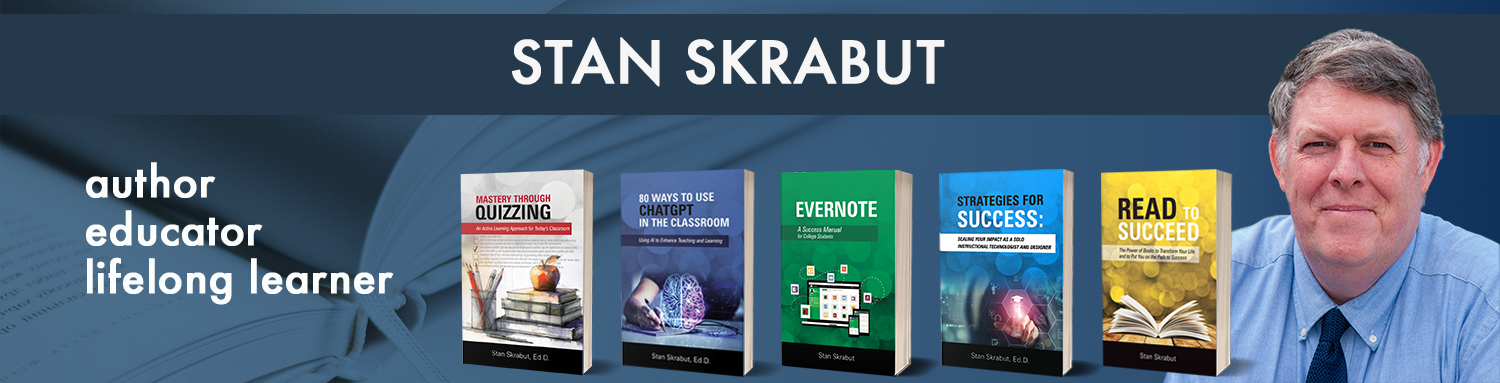
When ChatGPT first appeared, many institutions reacted with fear. I saw campuses scrambling to ban it outright. Instead of joining that rush, I chose a different path. I wrote a book called 80 Ways to Use ChatGPT in the Classroom to help faculty understand what this tool could do when used thoughtfully and responsibly.
I recognized early on that generative AI had the potential to support teaching, spark creativity, and improve productivity if we took the time to learn how to use it well.
This isn’t theoretical for me. I use generative AI every single day, often multiple times a day, to help solve problems, brainstorm ideas, and move projects forward.
Human Plus Machine, Not One or the Other
Even this blog post is a good example. I’m using generative AI right now as part of the writing process. It helps me organize my thoughts, refine language, and move faster. But the ideas, experiences, and perspectives are still mine.
That combination matters.
A friend of mine recently described her use of AI as support, not a shortcut, and that really resonated with me. Used properly, AI can help create better work, improve creativity, and increase efficiency. Used poorly, it becomes a crutch that strips out thinking and reflection.
The difference is whether the human stays in the loop.
The Takeaway
So here’s what I’d encourage you to do. Give it a try. Experiment. Be curious. Let AI support your work rather than replace it. Use it to amplify your creativity, not bypass it.
At the end of the day, you’re still the human in charge. Generative AI is just another tool. A powerful one, yes. But like every great tool before it, its real value comes from how thoughtfully we choose to use it.


“I quickly understood the power of computers as a force multiplier…” Great hook, very profound Stan. I’m not even directly in the field and yet so often I have the question posed to me: “…But as a former industry professional and now an educator, aren’t you AFRAID of it??” Fear of the unknown appears to be a default assumption.
I suppose so… it’s human, with fans flamed by decades of dystopian movies/books about “…machines taking over.”
It’s led to some interesting discussions.
I’ve fallen back on the positions in your books a few times as you might expect.
Rolling up my mental sleeves and diving into AI’s use has been the single most effective (and interesting!) cure.
Keep up the great work that you do!
Thanks for the support. We need to get past the fear.