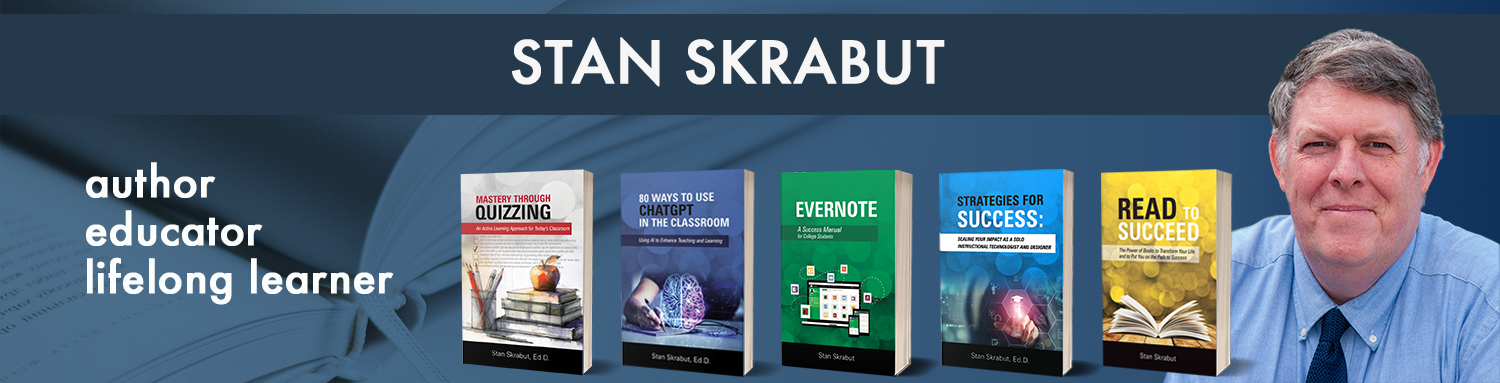


I get asked from time to time why I write books. Or why I keep publishing blog posts, creating guides, and sharing ideas online. The short answer is that I’ve learned that sharing what I’m learning helps more people than keeping it to myself. The longer answer is a bit more personal.
For a long time, I didn’t think of myself as a writer at all.
From “I Can’t Write” to “Maybe I Can”
Back in high school, I was convinced I couldn’t write. Writing felt like something other people did. Smart people. Talented people. Not me. That belief stuck around longer than it should have.
Then I found myself in a doctoral program. If you’ve ever gone through one, you know what comes next. You write. A lot. Eventually, you write a dissertation, which is essentially a book. Somewhere along the way, something shifted. I realized that maybe I could write after all. Not perfectly. Not poetically. But clearly enough to explain ideas and help others understand them.
That confidence carried over into my professional life, especially working in higher education. I started writing blog posts to help faculty and staff learn new things. How to use a tool. How to design a course. How to solve a problem they were running into. Writing became less about proving something and more about being useful.

A Writer Writes
Seeing a Need and Filling the Gap
My first book, Read to Succeed, came out of something very ordinary. Conversations in the hallways of a community college. Faculty were saying students were not reading. Students were saying they wanted to be successful. At the same time, I was listening to podcasts where people making six or seven figures a month talked openly about how much they read. Books everywhere. All the time.
That disconnect stuck with me.
Students wanted to succeed. Faculty wanted students to engage. Successful people were constantly talking about reading. So I wrote a book to help bridge that gap. Not because I had all the answers, but because I saw a problem worth exploring and sharing.
That pattern has repeated itself ever since.
Solving One Problem Versus Helping Many
As I worked with faculty, I noticed something else. I was being asked the same questions over and over again. At first, I answered them one-on-one. That worked, but it wasn’t efficient. I found myself constantly duplicating effort.
So I started doing something different.
When a question came up, I would write a detailed response. Sometimes that included screenshots. Sometimes a short video. Sometimes, step-by-step instructions. Then I would turn that response into a blog post and send the link back to the faculty member.
That one post solved their problem. Then I could reuse it for the next person who asked the same question. What surprised me was discovering that people far beyond my institution were also finding and using those posts. Suddenly, a solution meant for one person was helping people around the world.
That was a turning point for me.
Working Out Loud and Learning Out Loud
This is where the idea of working out loud and learning out loud really took hold for me. Instead of treating problem-solving as something private, I started treating it as something worth sharing.
In higher education, there’s often a belief that you should not share unless you are an expert. Unless you have everything figured out. I’ve never believed learning works that way. Learning is messy. You stumble. You try things. You get some things wrong. Then you adjust.
I wanted to model that. To show that it’s okay not to have all the answers. That exploration itself has value. By sharing what I’m learning in real time, I can help people who are just a step or two behind me on the same path.
You Are an Expert to Someone
One thing I say often is this. You are an expert to someone who is behind you in the learning journey. If someone asks you for guidance and you can help them move forward, you are the expert at that moment.
It does not need to be perfect. Perfect is the enemy of good. Most people are not looking for perfection. They are looking for progress. They want to move forward. By not sharing what you know, you may be unintentionally holding someone back who could benefit from your experience.
There’s a quote that stuck with me over the years. Knowledge is power. But now, it’s really the sharing of knowledge that is power. I believe that idea originated with a LinkedIn CEO, and it rings true every day I write.
Why Books Still Matter to Me
Books give me space. Space to explore ideas more deeply. Space to connect patterns across years of experience. Whether I’m writing about artificial intelligence in learning, ChatGPT for educators and trainers, mastery quizzing, or lessons learned from twenty-five years in higher education, the goal is the same.
If I see a gap, I try to close it.
If I see confusion, I try to bring clarity.
If I see someone struggling, I try to write something that helps them get to the next level.
Sometimes that takes the form of a blog post. Sometimes it becomes a video. Sometimes it turns into a book.
Closing Thoughts
At the end of the day, I write and share because learning is not meant to be hoarded. It’s intended to be passed along. If something I’ve written helps even one person solve a problem or see a new possibility, then it’s worth it.
Thanks for reading. Thanks for learning out loud with me. And if you’re on the fence about sharing your own work, I hope this gives you a little nudge to put it out there. Someone out there is already waiting for it.
Photo by Ron Lach

